In any conveyor system, belts and chains usually receive the most attention. However, the performance and lifespan of these moving components depend heavily on what supports them underneath — wear strips and chain guides.
In Indian industrial environments, where conveyors often operate in dusty, humid, high-temperature, or washdown conditions, UHMWPE wear strips in India have become an essential part of reliable conveyor design. Their role goes far beyond basic support — they directly influence friction levels, energy consumption, noise, and overall system durability.
What Are UHMWPE Wear Strips and Chain Guides?
UHMWPE (Ultra High Molecular Weight Polyethylene) wear strips are low-friction support elements installed along conveyor frames. They provide a smooth sliding surface for:
- Plastic modular belts
- Thermoplastic slat chains
- Stainless steel slat chains
- Multiflex chains
Conveyor chain guides ensure that the chain travels in the correct path, maintaining alignment and reducing lateral movement.
Together, these components act as the foundation of the conveying system.
Why Low Friction Matters in Conveyor Systems
Friction is one of the biggest contributors to conveyor wear and energy loss. When chains slide over improper or worn surfaces, several problems occur:
- Increased motor load
- Excessive heat generation
- Faster chain elongation
- Sprocket wear
- Higher power consumption
High-quality low friction wear strips made from UHMWPE significantly reduce sliding resistance. This improves efficiency and extends the life of both the chain and the drive system.
In high-speed FMCG, beverage, and packaging lines, even small reductions in friction can result in noticeable operational savings.
Why UHMWPE Is Ideal for Indian Conditions
Indian manufacturing environments often present challenges such as:
- Temperature fluctuations
- High humidity in beverage and dairy plants
- Frequent washdowns
- Dust exposure in secondary packaging lines
- Continuous multi-shift operation
UHMWPE wear strips are well suited to these conditions because they offer:
- Excellent wear resistance
- Chemical resistance
- Moisture resistance
- Low coefficient of friction
- Noise reduction properties
This combination makes UHMWPE wear strips in India a preferred choice across industries such as FMCG, food processing, pharmaceuticals, and packaging.
The Impact on Conveyor Chain Life
Chains are designed for strength and flexibility — but without proper guidance and support, they deteriorate faster.
Properly installed conveyor chain guides:
- Maintain chain alignment
- Reduce side drag
- Prevent uneven load distribution
- Protect sprocket teeth
- Minimise vibration
Without effective guidance, even premium chains may fail prematurely.
In many cases, replacing worn wear strips at the right time can prevent the need for expensive chain replacements.
Noise Reduction and Operator Comfort
Noise is a common issue in conveyor-heavy environments. Metal-to-metal contact or poorly supported chains increase operational sound levels.
UHMWPE’s inherent material properties allow for quieter operation compared to metallic alternatives. Reduced noise contributes to:
- Improved workplace conditions
- Lower vibration stress on equipment
- Enhanced overall system stability
For high-throughput plants running multiple conveyor lines, this makes a measurable difference.
Supporting Curves and Complex Layouts
Modern production facilities often use curved conveyor layouts to optimise floor space. In such applications, chain guidance becomes even more critical.
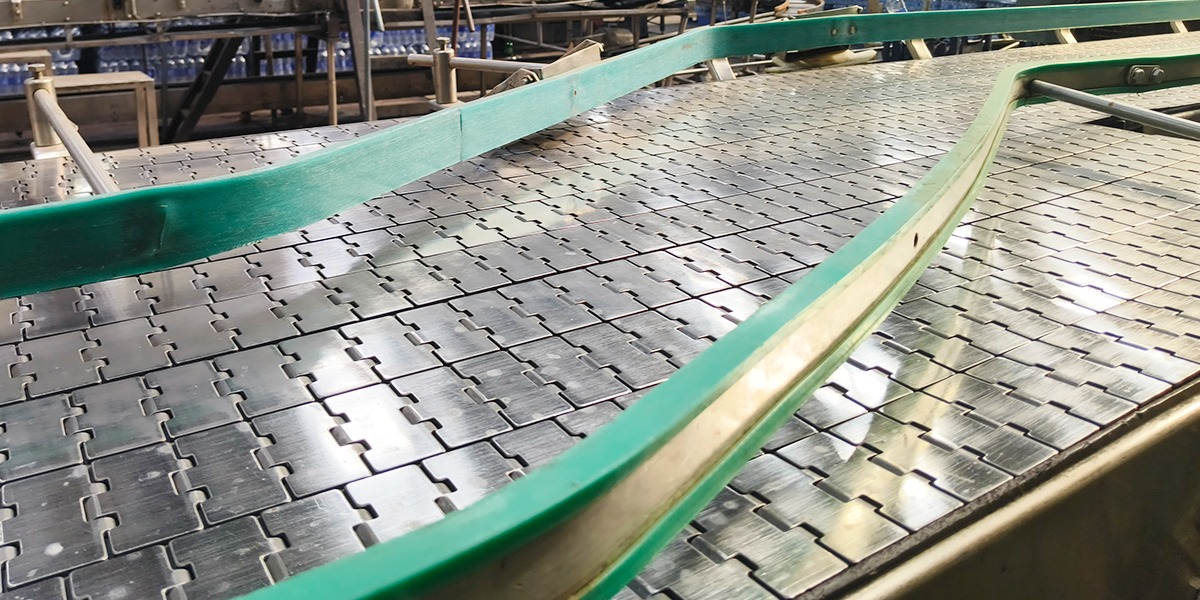
Corner tracks and curved sections depend on precision-guided movement. High-quality wear strips ensure smooth travel through bends without excessive friction or side loading.
This is particularly important in bottling, carton conveying, and accumulation zones.
Cost Implications: Small Component, Big Impact
Wear strips and guides represent a relatively small percentage of total conveyor investment — yet they significantly influence:
- Chain replacement frequency
- Energy costs
- Maintenance downtime
- Motor life
- Sprocket longevity
Neglecting them can lead to a cascade of mechanical failures.
On the other hand, timely inspection and replacement of low friction wear strips can drastically reduce long-term maintenance expenses.
Preventive Maintenance Perspective
To maximise performance, maintenance teams should:
- Inspect wear thickness periodically
- Check for uneven surface wear
- Monitor chain alignment
- Replace worn sections before chain damage occurs
A proactive approach ensures that wear strips continue to perform their protective function effectively.
Conclusion
In Indian conveyor systems, reliability is not determined by belts and chains alone. The supporting components — particularly UHMWPE wear strips and conveyor chain guides — play a decisive role in system efficiency and durability.
High-quality UHMWPE wear strips in India help reduce friction, extend chain life, lower noise, and minimise energy consumption. They transform sliding contact into controlled movement and protect high-value conveyor components from premature failure.
At UCPL, we support industrial operations with precision-engineered wear strips and chain guide solutions designed for demanding Indian manufacturing environments. Because in conveyor systems, the parts you don’t always see often make the biggest difference.