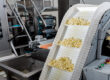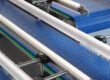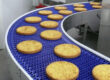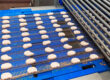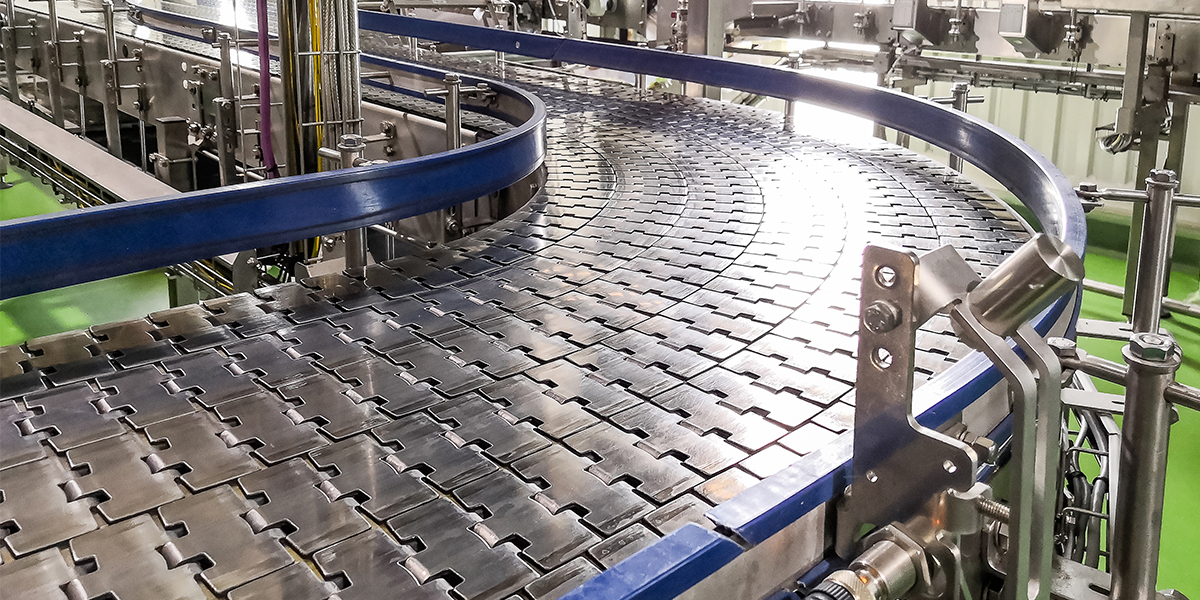
In the complex ecosystem of industrial conveying systems, operational efficiency often hinges on components that receive minimal attention during the design phase. Among these overlooked elements, corner tracks represent a critical junction point where system reliability and performance converge. While engineering focus typically concentrates on primary components such as drive systems, belting materials, and structural frameworks, the sophisticated engineering of corner transitions can ultimately determine system-wide operational success.
Understanding Corner Dynamics in Conveyor Operations
The physics of product movement through conveyor corners presents unique engineering challenges that extend beyond simple directional changes. When products navigate curved sections, several mechanical phenomena occur simultaneously that can compromise system performance:
Lateral Force Generation: As belts traverse curved paths, lateral friction forces increase exponentially against static guide systems, creating resistance that directly impacts drive system efficiency and energy consumption.
Belt Resistance Characteristics: Wide-format belts and heavily loaded systems exhibit natural resistance to bending forces, particularly in applications requiring tight radius turns or high-speed operations.
Inertial Force Management: Product momentum creates outward forces during directional changes, potentially leading to alignment issues, product displacement, and system instabilities.
Without proper engineering intervention at corner transitions, these forces compound to create operational inefficiencies, accelerated component wear, and unplanned maintenance events.
Engineering Solutions Through Advanced Corner Track Systems
Corner track assemblies represent sophisticated engineering solutions designed to manage the complex force dynamics inherent in conveyor direction changes. These precision-engineered components provide controlled guidance for both belt systems and transported products, fundamentally transforming corner performance characteristics.
The effectiveness of corner track solutions depends on two critical engineering parameters: material science applications and geometric precision. Advanced polymer materials, including Ultra-High Molecular Weight Polyethylene (UHMW-PE) and acetal compositions, offer exceptional wear resistance characteristics combined with low-friction properties essential for high-speed operations and wash-down environments.
Beyond material selection, geometric precision in track design determines system performance outcomes. Proper radius matching between track geometry and belt characteristics, combined with seamless integration into existing conveyor architecture, ensures optimal force distribution and operational efficiency.
Quantifiable Performance Improvements: A Case Study Analysis
Recent field applications demonstrate the measurable impact of engineered corner track solutions on operational performance. In one production environment experiencing recurring operational interruptions, systematic analysis identified corner-related product jamming as the primary failure mode, occurring with consistent frequency despite optimal performance in straight-section operations.
Implementation of precision-engineered corner track inserts, without modification to other system components, yielded significant performance improvements:
- Jam frequency reduction: >80%
- Energy consumption optimization
- Maintenance intervention reduction
- Overall equipment effectiveness (OEE) improvement
This case exemplifies how targeted engineering solutions can deliver substantial operational improvements through focused component optimization.
Strategic Implementation Considerations
Successful corner track implementation requires systematic evaluation of several critical factors:
Product-Specific Testing Protocols: Comprehensive validation with actual product configurations, particularly for irregular geometries or multi-format production lines, ensures optimal performance across operational scenarios.
Precision Manufacturing Standards: Investment in precision-curved track systems, rather than field-modified straight components, ensures consistent performance characteristics and extended operational life.
Maintenance Accessibility Design: Modular track designs incorporating slide-in or clip-in mounting systems minimize maintenance downtime while ensuring accessibility for routine service operations.
Future Technology Integration
The evolution toward Industry 4.0 principles is driving innovation in corner track technology through integrated sensor systems capable of real-time monitoring of critical performance parameters including temperature profiles, vibration characteristics, and wear progression. While these advanced solutions represent significant technological advancement, proven mechanical engineering principles continue to deliver substantial return on investment through improved system reliability and operational efficiency.
Engineering Excellence in System Design
In conveyor system engineering, straight-line operations present minimal design challenges. Corner transitions, however, reveal the depth of engineering expertise and attention to detail that distinguishes superior system performance. When friction management, force distribution, and flow dynamics receive comprehensive engineering attention throughout the system—including corner track optimization—the result extends beyond improved performance metrics to encompass enhanced component longevity across the entire system.
Through decades of field experience and continuous engineering innovation, we understand that operational excellence often depends on components that operate with minimal visibility. In conveyor system design, as in many engineering disciplines, the most critical components are frequently those that perform their function silently and reliably, enabling optimal performance of the entire system.