
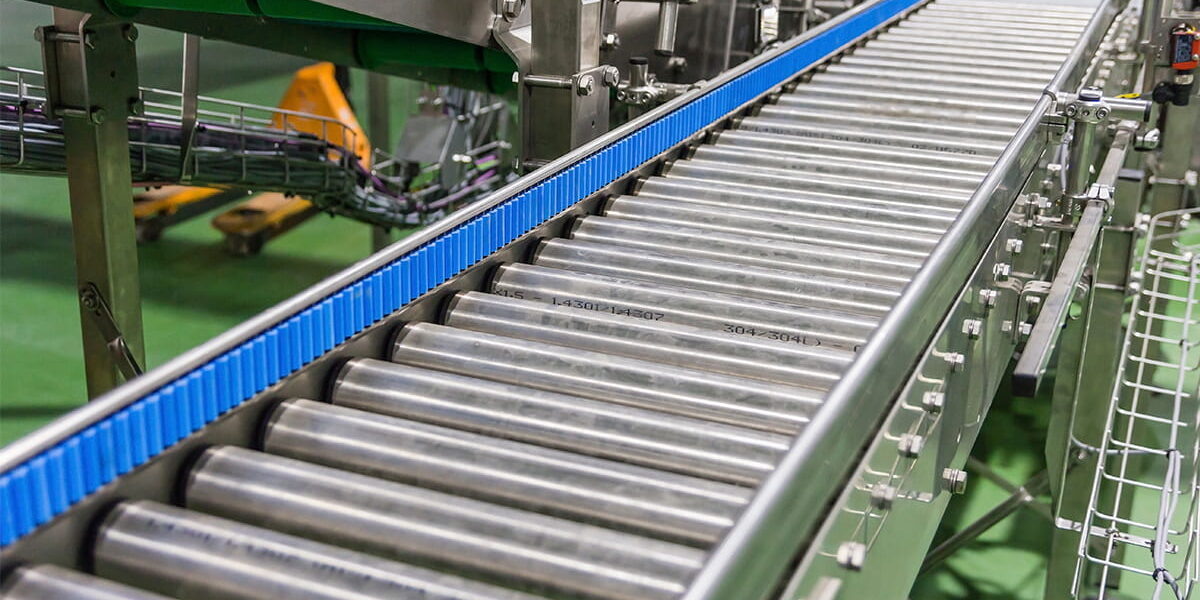
As industries continue to evolve toward greater efficiency and automation, the critical role played by conveyor systems cannot be overstated. At the heart of these systems lie conveyor rollers, components that may seem simple but represent a cornerstone of operational reliability and productivity.
With over 25 years of experience leading Ultraplast Chainbelts Pvt Ltd, I have witnessed firsthand how the informed selection of roller types can differentiate a conveyor system’s success or failure. This article explores insights on three prevalent roller types—tapered, straight, and gravity rollers—shedding light on their fundamental benefits, inherent limitations, and strategic applications in industrial settings.
Tapered Rollers: The Heavy Lifters in Complex Environments
Tapered rollers stand out due to their conical design that skillfully manages both radial and axial forces simultaneously. This unique capability provides remarkable load distribution and resistance to misalignment, which are essential in high-demand environments such as heavy manufacturing, automotive assembly, and large-scale logistics.
From a director’s point of view, the investment in tapered rollers is justified by their durability and ability to sustain challenging conditions. They minimize downtime by reducing friction-induced wear and maintain conveyor precision over long operational cycles.
- Proven Durability: Our experience at Ultraplast reinforces that tapered rollers extend conveyor lifespans, especially under fluctuating and multi-directional load stresses.
- Maintenance Considerations: While more complex, their careful installation and periodic alignment checks ensure consistent performance.
- Cost-Benefit Dynamics: Though their upfront costs are higher, the long-term reduction in maintenance and replacements translates into substantial ROI for industrial operations.
Straight Rollers: The Backbone of Efficient, Cost-Conscious Conveyors
Straight rollers represent simplicity and cost-efficiency without compromising reliability in environments with straightforward load patterns. They are frequently employed in food processing, packaging, and warehousing, where loads tend to be uniform and less variable.
For decision-makers, the appeal of straight rollers lies in their balance of functionality and economy—manufactured with precision yet easy to maintain. They enable enterprises to scale conveyor capacity without significant capital expense while maintaining operational stability.
- Economic Efficiency: Ultraplast has consistently delivered straight roller solutions that optimize operational costs without sacrificing performance.
- Ease of Use: Their straightforward cylindrical design ensures rapid replacements and minimal system downtime.
- Design Limitations: It’s important to recognize their limits in handling lateral or axial forces, which necessitates cautious application in more dynamic conveyor setups.
Gravity Rollers: Sustainable and Practical Movement Solutions
In scenarios emphasizing cost containment and sustainability, gravity rollers offer a compelling solution. Operating solely on gravity’s force, these rollers are invaluable in inclined or declined conveyor routes, particularly in distribution centers and light assembly operations.
From a strategic viewpoint, gravity rollers align with modern sustainability goals—requiring no electricity and minimal maintenance—and support flexible conveyor layouts adaptable to changing operational needs.
- Sustainability Focus: By eliminating power requirements, gravity rollers reduce overall energy footprints, a priority in today’s environmentally conscious industries.
- Operational Simplicity: Their low maintenance burden and ease of installation provide operational agility.
- Constraints in Control: However, their reliance on slope gradient and load weight demands careful system design to ensure consistent material flow and safety.
Strategic Roller Selection: Aligning Solutions with Business Goals
Choosing the right roller type extends beyond technical specifications—it requires a nuanced understanding of operational workflows, total cost of ownership, and long-term business objectives.
At Ultraplast, our portfolio is designed to meet these complex needs through robust engineering and material science advancements. Whether it’s stainless steel, hardened steel, or specialized polymers, our rollers are crafted to withstand the rigors of diverse industrial applications from pharmaceuticals to automotive.
Investing time in selecting the optimal roller mitigates unexpected downtime, enhances safety standards, and drives productivity gains. It also empowers companies to respond nimbly to market demands, maximizing throughput without compromising equipment health.
Conclusion
In my leadership role at Ultraplast Chainbelts Pvt Ltd, I emphasize the importance of expert guidance and quality manufacturing in conveyor design. The decision on roller type should be a strategic one, backed by detailed operational analysis and an understanding of the strengths and limitations inherent to tapered, straight, and gravity rollers.
For companies aiming to future-proof their material handling systems, I recommend collaborative engagement with experienced manufacturers who combine innovative design with practical expertise. Together, we can transform conveyor performance into a sustainable competitive advantage.