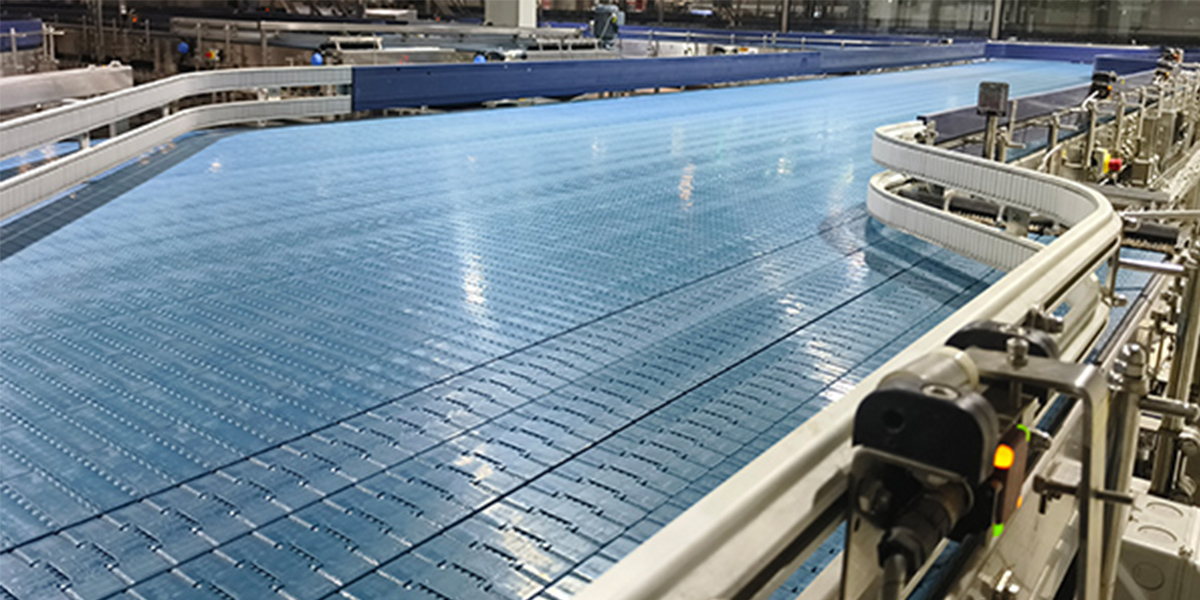
In the fast-evolving world of material handling, Original Equipment Manufacturers (OEMs) across the globe demand not only reliability but absolute precision and performance from every component that goes into their conveyor systems. Leading manufacturers stand at the forefront of this domain—developing high-performance conveyor components that are purpose-built to meet and exceed international OEM specifications.
From material selection to manufacturing practices, top-tier suppliers don’t merely provide parts—they engineer reliability. This commitment to engineering excellence makes certain manufacturers trusted partners for OEMs operating in high-performance sectors such as automotive, food processing, FMCG, bottling, and industrial automation.
The Engineering Philosophy Behind Global Standards
What sets exceptional component manufacturers apart is their systematic approach to design and rigorous compliance with globally recognised OEM standards. Each product is built with a clear objective: to integrate seamlessly into global systems with minimal downtime and superior compatibility. Whether it’s a chain guide, sprocket, clamp, wear strip, or support element, every product must be crafted to tight tolerances and engineered to last under demanding operational conditions.
Precision Materials for Global Relevance
Modern conveyor component manufacturing relies on engineering-grade polymers and alloys specifically selected for their durability, low friction coefficient, chemical resistance, and wear performance. Materials like UHMWPE, HDPE, and PTFE are used extensively—each tailored to suit the specific mechanical, thermal, or hygienic needs of OEM partners. All materials must be sourced to meet or exceed ASTM, ISO, or DIN material standards, enabling effortless compliance with global regulatory and manufacturing benchmarks.
This approach results in conveyor components that not only last longer but also perform more consistently—essential for manufacturers who cannot afford unscheduled downtimes or product contamination.
Achieving Compatibility with Global Systems
Quality conveyor components are designed with a deep understanding of global conveyor systems—whether metric or imperial, modular or fixed, belt-driven or chain-driven. Every curve, bracket, clamp, and profile must be tested to fit with leading OEM configurations from Europe, the U.S., and Asia.
Whether building or retrofitting equipment from Bosch Rexroth, FlexLink, or Dorner, quality components are dimensionally compatible and functionally aligned to OEM norms. This cross-system compatibility ensures faster installations and lower engineering overheads for OEM clients.
Stringent Quality Assurance Standards
Meeting OEM standards is not a one-time achievement—it’s a continual process. Each conveyor component must pass through multiple stages of quality control, including:
- Dimensional Verification: Using CNC-based coordinate measuring machines (CMM) to ensure micron-level accuracy
- Material Traceability: Every component can be traced back to its raw material source, with material test certificates (MTCs) available on demand
- Lifecycle Simulation: Products undergo accelerated wear testing to simulate years of operational stress
- Client-Customised QC Reports: OEM clients receive custom inspection reports aligned with their specific documentation and audit protocols
These practices ensure that components meet the reliability and repeatability benchmarks OEMs rely on to protect their brand reputation.
Engineering for Scalability and Global Supply
Leading manufacturers invest in state-of-the-art manufacturing facilities equipped for both short-batch custom components and high-volume production runs. This agility enables suppliers to serve small automation startups and large multinationals with equal efficiency. Components are packaged and labelled with internationally compliant markings, batch numbers, and barcodes—making global distribution and warehouse integration frictionless.
Additionally, advanced suppliers offer just-in-time (JIT) delivery models and vendor-managed inventory (VMI) solutions for large OEM clients, reducing their carrying costs and improving assembly line efficiency.
Engineering Collaboration Over Simple Supply
What makes certain manufacturers preferred engineering partners is their co-development mindset. Design teams often collaborate directly with OEM engineering departments during the prototyping phase. Whether a conveyor system requires a heat-resistant bracket for a baking line or an FDA-grade wear strip for a dairy setup, the best suppliers contribute to design ideation, validation, and performance optimisation.
The result is not just a component that fits—it performs, evolves, and creates value over time.
Conclusion: The Future of Conveyor Component Engineering
For OEMs aiming to scale globally, component reliability and standard compliance are non-negotiable requirements that directly impact operational efficiency and brand reputation. The engineering of conveyor components for global OEM standards represents a sophisticated blend of material science, precision manufacturing, and systems integration expertise.
As Industry 4.0 continues to reshape manufacturing landscapes, the demand for smarter, more adaptable conveyor systems will only intensify. Components must not only meet current performance benchmarks but also be designed with future scalability in mind. This includes considerations for IoT integration, predictive maintenance capabilities, and enhanced sustainability profiles.
The most successful component manufacturers understand that they are not merely suppliers but strategic partners in their clients’ success. By maintaining rigorous engineering standards, investing in advanced manufacturing technologies, and fostering collaborative relationships with OEMs, these manufacturers ensure that conveyor systems worldwide operate with the precision, reliability, and efficiency that modern industrial operations demand.
At Ultraplast, this philosophy drives every aspect of product development and manufacturing, positioning the company as the invisible force that keeps global conveyor systems moving—with precision, consistency, and unwavering reliability. As conveyor technology continues to evolve in speed, complexity, and safety demands, Ultraplast remains committed to engineering excellence that meets and exceeds the expectations of OEM partners worldwide.